Ariel Monitoring & Evaluation Support
know.space provided independent monitoring and evaluation support to the UK Space Agency for its national investment in Ariel, the European Space Agency mission that will study the atmospheres of around 1,000 exoplanets. Our work assessed delivery progress and emerging impacts from the UK’s scientific, technical and programme leadership of the mission.
A report for the UK Space Agency.
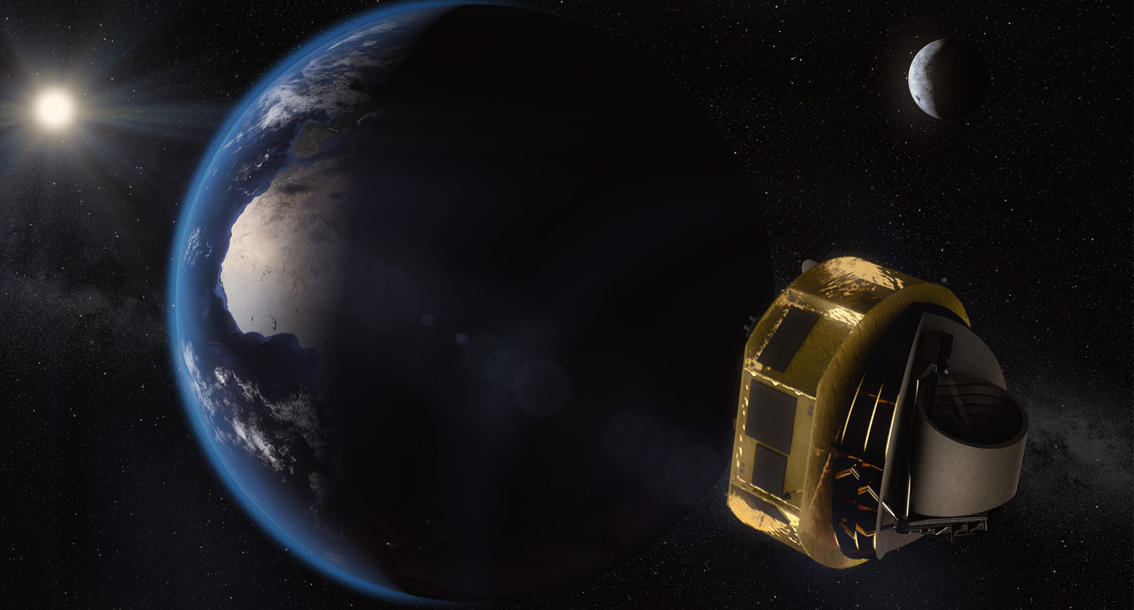
Artist's impression of Ariel on its way to Lagrange Point 2 (L2). Credit: ESA/STFC RAL Space/UCL/Europlanet-Science Office
.project
Ariel is a major European space science mission, expected to launch in 2029, which will investigate how planets and their atmospheres form and evolve. The UK Space Agency has committed £30.3 million in national funding to secure UK leadership roles across Ariel’s science, engineering and programme delivery, complementing the UK’s contribution through ESA.
know.space was commissioned in 2023 to provide independent monitoring and evaluation support over more than two years. Our work was designed to help the UK Space Agency understand whether its investment was progressing as intended, identify emerging benefits, assess delivery risks and capture lessons that could strengthen future mission phases and wider space science investments.
The evaluation considered progress against four investment objectives: advancing UK scientific and technical leadership; strengthening international reputation and collaboration; attracting and developing skilled people; and stimulating innovation and commercial opportunity through space technology and data science.
Key findings
The evaluation found strong early progress across all four investment objectives, while recognising that many of Ariel’s most significant benefits will only emerge after launch and the return of mission data.
Scientific leadership and collaboration: UK national funding has secured influential roles for UK organisations and supported growing scientific output and international collaboration. Ariel-related publications featuring UK authorship increased over the evaluation period, with UK researchers collaborating with partners across 37 countries.
Skills and inspiration: UK leadership of Ariel is supporting specialist skills development in areas including AI, software systems, mechanical engineering and data modelling. The mission has also underpinned extensive public engagement and citizen science activity, including the Ariel Data Challenge and ExoClock.
Innovation and commercial potential: The study identified promising early evidence of commercial benefits connected with Ariel-related capabilities, particularly in AI, machine learning and space technology. Ariel-linked companies had secured £14.6 million in contracts and funding by the time of the evaluation.
The evaluation also identified delivery challenges, including resource constraints, long-term funding uncertainty and technical delays elsewhere in the international mission supply chain. Continued monitoring, risk management and effective collaboration will be important to ensure that the UK realises the full long-term value of its investment.
.methodology
Our evaluation used a mixed-methods approach, combining qualitative insight with quantitative evidence to examine both how the UK-funded elements of Ariel were being delivered and what benefits were beginning to emerge.
-
We consulted individuals from across all UK-funded organisations involved in Ariel, alongside relevant wider mission and governance stakeholders. These discussions provided evidence on delivery performance, collaboration, skills development, emerging benefits, delivery risks and opportunities for future mission phases.
-
We applied a real-time evaluation approach to examine how the UK-funded elements of Ariel were being delivered as the mission progressed. Engagement with Project Management Board meetings helped us capture operational insights, identify delivery lessons and develop timely recommendations for subsequent phases of Ariel and other UK Space Agency-funded missions.
-
We established a repeatable monitoring approach aligned with the UK Space Agency’s Ariel benefits realisation framework. Indicators were tracked at six-monthly intervals across scientific leadership, international collaboration, skills and inspiration, and innovation and commercial opportunity.
-
We analysed research publication, authorship, citation and collaboration data through the Dimensions database, supplemented by Researchfish evidence. Consistent search parameters were applied across the baseline and reporting periods to assess changes in Ariel-related scientific activity and UK participation over time.
-
We used a theory-based evaluation approach to assess how UK Space Agency funding contributed to emerging outcomes. Drawing on the investment objectives, theory of change and indicator evidence, we considered the role of national funding in securing UK leadership, influence and benefits, alongside the counterfactual question of what might have happened without that investment.
Across four six-monthly reporting cycles, we gathered and analysed evidence on science, collaboration, skills, innovation and mission delivery. This enabled us to establish baseline measures, monitor changing trends and assess the contribution of UK Space Agency funding to observed outcomes, while recognising the wider influences associated with a large international mission.
.report
Read the full evaluation report, hosted on GOV.UK, for detailed findings on mission delivery, emerging impacts and the contribution of UK Space Agency investment to the UK’s leadership role in Ariel.