In-Orbit Servicing: Dependencies with Space Surveillance and Tracking
know.space provided research and analysis for the UK Space Agency on the relationship between in-orbit servicing and Space Surveillance and Tracking. The study examined how tracking capabilities support the safe, commercially viable and trusted delivery of emerging services including satellite life extension, inspection, in-space assembly and active debris removal.
A report for the UK Space Agency.
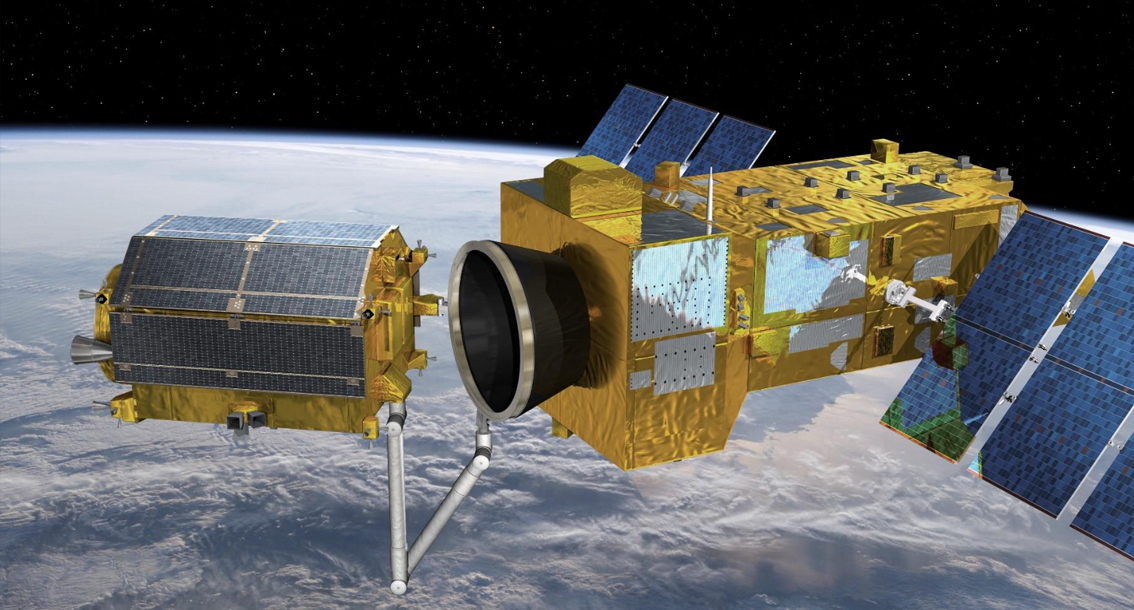
Credit: ESA
.project
In-orbit servicing has the potential to extend satellite lifetimes, support in-space manufacturing and assembly, and improve the sustainability of the orbital environment through debris removal and recycling. However, these activities depend on operators being able to locate, monitor and safely approach spacecraft and other objects in increasingly congested orbits.
The UK Space Agency commissioned know.space to examine the dependencies between the emerging in-orbit servicing market and Space Surveillance and Tracking capabilities. The research considered how tracking data could support mission planning, launch, collision avoidance, rendezvous, independent monitoring and post-mission verification, as well as its relevance to licensing, insurance and regulatory oversight.
The study also explored the performance improvements, standards and policy frameworks required to support future market development. Conducted at an early stage in the evolution of both markets, it identified areas of consensus while recognising that operational requirements would continue to develop through forthcoming demonstration missions.
Key findings
The research found that Space Surveillance and Tracking would be central to the safe and sustainable development of in-orbit servicing, although requirements would vary considerably according to the mission, orbit and status of the target spacecraft.
A critical but mission-specific capability: SST data can support planning, launch collision avoidance, target identification, collision risk management, independent monitoring and mission verification. Its importance is particularly high for debris and other non-cooperative objects that cannot transmit their own position data. Close-proximity operations, however, must rely on more accurate on-board sensors.
Improved data and infrastructure are needed: Existing systems were not designed to provide the persistent, reliable and highly accurate tracking required by some servicing missions. Stakeholders identified a need for lower latency, broader coverage, improved forecasting, higher spatial resolution, mixed ground- and space-based sensors, and better interoperability between public and commercial data sources.
Commercial and regulatory viability depends on effective risk management: Although a servicing mission might theoretically operate using on-board sensing alone, stakeholders considered operations without SST to be substantially riskier. Limited access to reliable tracking data could constrain licensing, insurance and, ultimately, the commercial viability of missions.
Transparency and international cooperation will shape market growth: Independent tracking can help demonstrate that dual-use servicing capabilities are being used for peaceful purposes and provide assurance to customers, regulators and other operators. International collaboration, shared standards and effective—but proportionate—regulation will be important to building trust and avoiding fragmented approaches.
.methodology
The study used a mixed research approach combining a desk-based review of relevant literature with consultations across the in-orbit servicing and Space Surveillance and Tracking communities.
know.space consulted 25 practitioners and subject-matter experts, including servicing and debris-removal operators, civil, military and commercial tracking providers, and representatives from the legal, insurance, regulatory, policy and academic communities. Follow-up desk research was used to test interview findings against published evidence and investigate issues raised during the consultations. The research was conducted between December 2019 and March 2020. Given the early maturity of both markets, the findings were intended to inform future policy and research rather than provide definitive technical requirements for every type of mission.
.report
Read the full report for detailed findings on how Space Surveillance and Tracking supports in-orbit servicing, the technical and institutional improvements required, and the implications for UK policy, regulation and future market development.