Bibliometric analysis of research linked to UK Space Agency funding
know.space, in association with Digital Science, conducted an independent bibliometric analysis of research linked to UK Space Agency funding. The study examined the scale, quality, reach and influence of publications produced between 2010 and 2020, including their citation performance, international collaboration and links to patents, policy documents and datasets.
A report for the UK Space Agency.
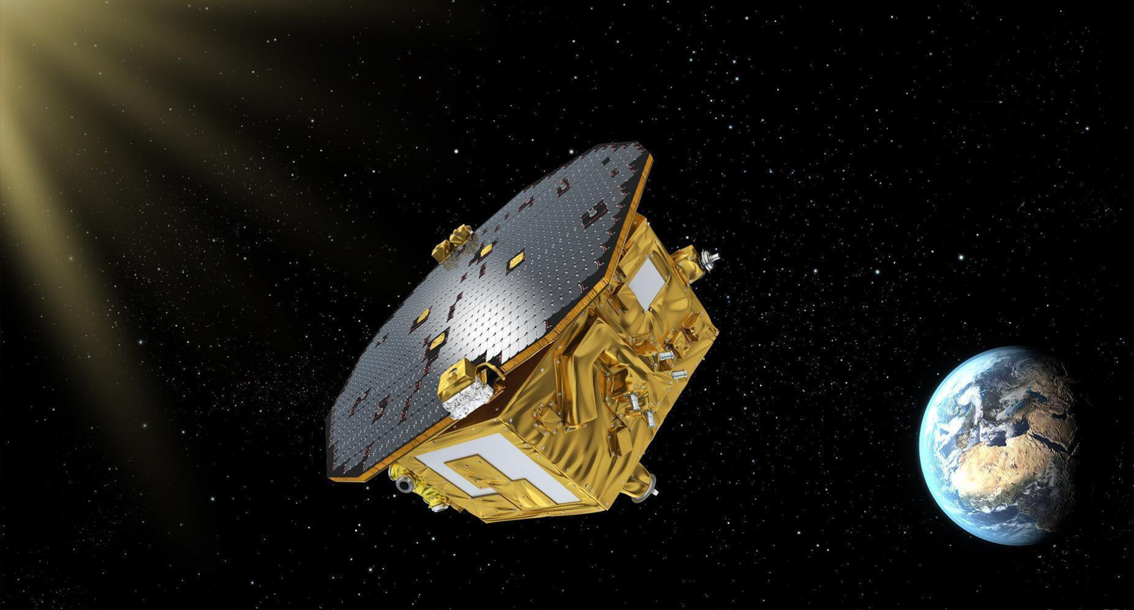
Credit: ‘LISA Pathfinder in Space’ (cropped). ESA/C. Carreau, CC BY-SA 3.0 IGO.
.project
Publicly funded research generates new knowledge, develops skills and technologies, and can produce wider benefits across industry, policy and society. Understanding these outcomes requires analysis that goes beyond publication counts to consider the quality, reach and influence of the research supported.
The UK Space Agency commissioned know.space, working with Digital Science, to assess the nature and impact of publications linked to its funding since the Agency’s establishment in 2010. The study analysed research fields, researcher characteristics, geographic distribution and international collaboration, alongside citation performance and wider indicators of impact.
The research also considered how UK Space Agency-supported publications were connected to patents, policy documents, datasets and public attention. The resulting evidence established a set of indicators that could be tracked over time through the Agency’s monitoring, evaluation and corporate reporting frameworks.
Key findings
The analysis found that research linked to UK Space Agency funding was extensive, highly collaborative and substantially more cited than comparable research in the same fields.
A substantial research portfolio: More than 3,000 publications linked to UK Space Agency funding were identified for the 2010–2020 period, involving over 4,100 unique researchers. Between 2010 and 2018, the portfolio generated an average of approximately 300 publications each year.
Strong citation performance: Around 88% of the research was cited more frequently than the relevant field benchmark. Half of the publications were cited four to five times more than the average for similarly aged research in the same subject area, while almost 10% exceeded the average by a factor of 25 or more.
A high concentration of globally leading research: On average, 7% of publications were within the global top 1% for citation performance in their year, 25% were in the top 5%, and 38% were in the top 10%.
Extensive international collaboration: Approximately 80% of publications involved researchers affiliated with more than one country. The United States and European countries were the principal international partners, with Scandinavian countries and Switzerland particularly prominent when adjusted for population.
Multidisciplinary reach and wider influence: Although physical sciences (and particularly astronomy and space science) dominated the portfolio, research also extended into Earth sciences, chemistry, engineering and other disciplines. The analysis identified links to patents, policy documents and research datasets, illustrating pathways from funded research to technological and wider societal impact.
.methodology
The study used a five-stage bibliometric methodology developed by know.space and Digital Science.
Bibliographic data supplied by the UK Space Agency was cleaned and matched against Digital Science’s Dimensions research database using publication identifiers and titles. Following the exclusion of publications produced before 2010 and outputs other than journal articles and book chapters, the final analytical dataset contained 3,098 publications. The matching process achieved a 92% match rate for the publication types included.
The analysis examined publication volume, fields of research, researcher characteristics, geographic distribution, international collaboration, citations and Field Citation Ratios. It also assessed alternative measures of impact, including online attention, patent citations, policy references and links to datasets.
Quality assurance included reproducible data-processing scripts, checks against the Dimensions database, investigation of outliers and independent verification of the additional calculations undertaken by know.space. The report also recognised limitations arising from reporting lags, source-data completeness and the illustrative rather than exhaustive coverage of patents and policy documents.
.report
Read the full report for detailed analysis of the volume, research fields, collaboration patterns and citation performance of publications linked to UK Space Agency funding, together with evidence of their wider influence on technology, policy and research data..