UK Space Science: a summary of theresearch community and its benefits
know.space was commissioned by the Space Academic Network (SPAN) to assess the scale, capabilities and impact of the UK’s space science research community for the Space Academic Network. The study mapped research activity across the country and examined the economic, scientific, technological and societal benefits generated by UK strengths in astronomy, planetary science, solar physics, space weather and plasma physics.
A report for the Space Academic Network (SPAN).
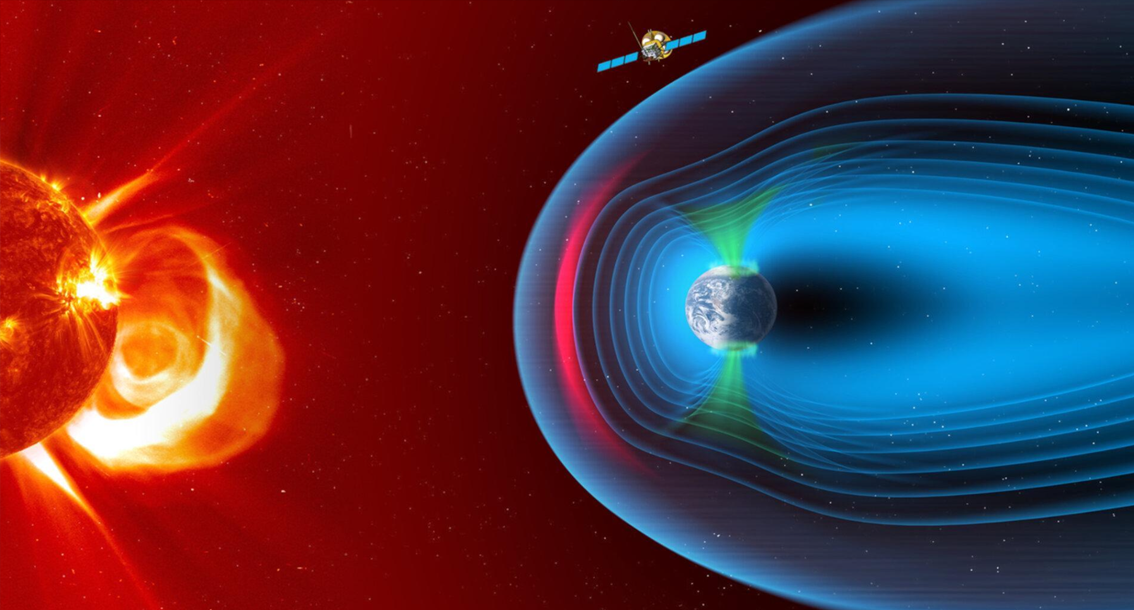
Credit: ESA
.project
The UK has a long-established position at the forefront of international space science, contributing scientific leadership, advanced instrumentation and data-processing expertise to missions exploring the Solar System and wider universe. However, the full scale of this research community—and the breadth of benefits arising from its work—had not been captured in a single, current evidence base.
The Space Academic Network commissioned know.space to map the size, location and disciplinary focus of the UK space science research base and assess the value generated by its activities. The study covered astronomy, astrophysics and cosmology; lunar and planetary science; and solar physics, space weather and plasma physics.
The research considered benefits across the mission lifecycle, from spacecraft design, manufacture and operation to scientific discovery and wider knowledge spillovers. It also examined economic, technological, skills, cultural, inspirational, strategic and diplomatic impacts, using the Gaia mission as an in-depth illustration of how UK participation can create benefits across multiple areas.
Key findings
The study found that the UK has a substantial, geographically distributed and internationally competitive space science research community whose benefits extend well beyond academia.
A large and diverse research base: The study identified 53 universities with active space science research functions and approximately 2,050 university-based researchers at postdoctoral level or above. Researchers were present in every UK region and devolved administration, alongside significant additional capability in public research bodies, industry and specialist networks.
World-leading scientific and technical strengths: The UK holds leading positions across multiple fields and has particular strengths in instrumentation and data processing, including image sensors, infrared detectors, magnetometers and X-ray optics. Its scientific influence is also reflected in highly cited research and prominent leadership roles on major international missions.
Benefits throughout the mission lifecycle: UK space science supports contracts, employment, skills and industrial capability during mission design, manufacture and operation. Missions then generate new scientific knowledge and wider applications in areas including artificial intelligence, machine learning, autonomy, high-performance computing and large-scale data analysis.
Long-term and wide-ranging impacts: The benefits of fundamental research often emerge over decades rather than within short funding cycles. Continued success builds capability, reputation and competitiveness, while generating broader cultural, inspirational, strategic, diplomatic and technological value across the economy and society.
.methodology
The study followed a four-stage methodology combining detailed desk research, stakeholder consultation, evidence synthesis and reporting.
know.space reviewed more than 100 sources, including previous programme evaluations, academic and institutional publications, mission materials, impact case studies and unpublished evidence. A bottom-up review of university websites and relevant networks was used to identify institutions, research clusters, researcher numbers, career stages and disciplinary specialisms.
This analysis was complemented by 20 in-depth interviews with leading academics and representatives from organisations including RAL Space, the UK Astronomy Technology Centre, the Royal Astronomical Society and the UK Space Agency. Interview findings were used to test the quantitative mapping, identify examples of impact and explore the wider benefits of space science research. The work was conducted between November 2020 and February 2021. Researcher estimates were deliberately conservative and focused on a relatively narrow definition of space science, meaning the wider community is likely to be larger than the headline figures suggest.
.report
Read the full report, hosted by the Space Academic Network (SPAN), for a detailed mapping of the UK space science research community and an assessment of the economic, scientific, technological and societal benefits generated through its work.